
CONTEXT
Somalia is in a critical security transition. As Somali security forces gradually assume greater responsibility for securing the country, they are also increasingly engaged in direct combat operations aimed at reclaiming and stabilizing areas affected by conflict.
In many frontline regions, including Hirshabelle, Galmudug, and Southwest State, Jubaland and Puntland civilians continue to face serious protection risks, such as exposure to armed clashes, displacement, and the loss of traditional safety mechanisms.
This landscape is further strained by limited access to basic services and a lack of formal systems to track and respond to civilian harm. Meanwhile, in Kenya’s border counties (Garissa, Wajir, and Lamu), communities face insecurity driven by regional tensions and local security operations.
CIVIC began its engagement in East Africa in 2011, responding to growing concerns over civilian casualties during African Union (AU) peacekeeping operations in Somalia. CIVIC supported the adoption of new strategy of civilian protection including the African Union Mission in Somalia (AMISOM) indirect fire policy, civilian casualties tracking, analysis and response mechanism.
Today, we bridge the gap between military action and community safety through policy advocacy, military training, community engagement and support to civil society.
In Kenya, CIVIC launched operational activities in 2019, particularly in borderline counties such as Lamu, Wajir, and Garissa. In these regions, CIVIC established community protection groups (CPGs), conducted training for Kenya Defence Forces (KDF) on civilian protection and civilian harm mitigation, and facilitated civil-military dialogues to foster trust and transparency.
Since establishing its presence in Somalia in 2019, CIVIC has expanded its impact by partnering with national security institutions. We reinforced capacities of the Somali National Army (SNA) and local defense forces in Hirshabelle and Galmudug while supporting community-led protection efforts in frontline areas. This collaborative approach was formalized through a Memorandum of Understanding (MOU) with the Federal Government of Somalia, allowing CIVIC to work directly with key ministries to advance the Protection of Civilians (PoC) nationwide.

Through its work in the region, CIVIC ensures that civilians are central actors in their own safety and in the responses to the crisis.
Our key activities include:
Community Based Protection
Establishing or enabling, mobilizing and training Community Protection Groups (CPGs) to equip communities with the tools to mitigate protection risks, support community engagement with authorities and armed actors, and develop local safety solutions.
Engagement with Armed Actors
Tailored scenarios-based training for security forces on the Protection of Civilians (PoC), Civilian Harm Mitigation (CHM), session on International Humanitarian Law (IHL), Rules of Engagement (RoE), consideration of civilians presence and needs into military combat training, Community Engagement, Civilian Harm Tracking and Analysis and Amends.
Civilian-Military Dialogue
Facilitating trusted and safe dialogues between communities and security forces to address civilian protection concerns, improve transparency, and foster mutual respect for civilian protection.
Advocacy
Engaging with governments and institutions at local, national, regional, international and global levels to integrate civilian protection into security policies, regional frameworks and responses to the crisis.
Research
Conducting field-based research and protection analysis to civilian protection risks and opportunities to inform decision makers and relevant actors to elevate civilian voices and monitor trends in civilian harm.
CIVIC activities in Somalia
Government engagement and advocacy
Baidoa, Dhusamareeb, and Ballad – occasional program activities including training armed forces and engagement with state authorities.
CIVIC activities in Kenya
Community
Protection
Structures
Training and
Capacity
Building
Sustainability
Established 11 Community Protection Groups (CPGs) (6 in Kenya and 5 in Somalia) to lead grassroots initiatives, foster dialogue with security actors, and promote early warning system.
Trained over 650 Somali National Army (SNA) troops, 315 Local Defense Forces (LDF) in Hirshabelle and Southwest states, 80 Darwish personnel in Hudur and 40 in Jubaland, 150 Kenya Defence Forces (KDF) on protecting civilians and ethical conduct.
CIVIC implemented Training of Trainers (ToT) for the Civil-Military Coordination (CIMIC) unit within the SNA to build sustainable training capacity. These instructors now deliver PoC modules independently to SNA units.
In April 2026, The Federal Republic of Somalia’s Cabinet of Ministers has formally adopted the National Protection of Civilians (PoC) Policy. This landmark framework, developed with CIVIC’s strategic and technical support, aims to prevent, mitigate and respond to civilian's harm in conflict areas.
🚨 It introduces early warning system
🛡️ Strengthened Safeguards for internally displaced populations
🏥 Enhanced Protection for humanitarian personnel
⚖️ Oversight Mechanisms to ensure accountability and transparency
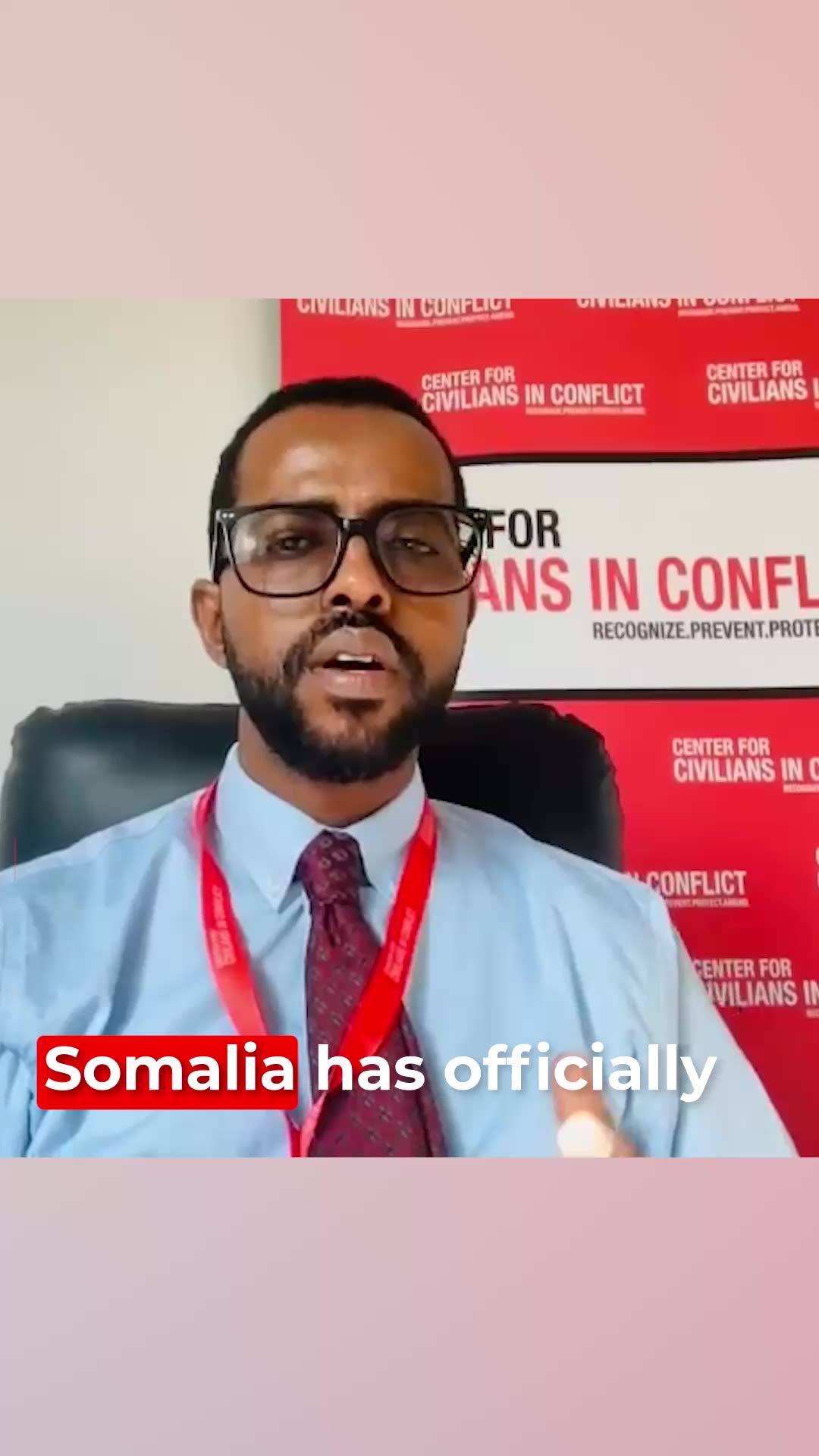
“This policy signals a clear shift: protecting civilians is no longer treated as an aspiration, but as a core responsibility of security institutions.
The real test now is how this commitment translates into decisions on the ground, where civilians continue to face daily risks".
Ahmed Ibrahim, CIVIC’s Director for Somalia & Kenya
The policy was developed under the leadership of the Ministry of Defense, in close coordination with relevant federal government institutions, and with technical support from the Office of the Special Envoy for Stabilization and Civilian Protection and CIVIC. It reflects a coordinated, government-led effort to strengthen the protection of civilians across Somalia.
The Federal Government of Somalia holds primary responsibility for translating the policy into action through the development of a Civilian Protection Implementation Plan (CPIP), led by relevant government institutions including the Ministry of Defense.
CIVIC will continue to provide technical and strategic advisory and humanitarian diplomacy support to ensure the policy is effectively operationalized across ministries, security institutions, and Federal Member States.
"What matters next is implementation. If this framework is properly resourced and applied, it can change how operations are conducted and reduce harm in very practical ways.
CIVIC will continue to work alongside Somali partners to ensure this policy delivers measurable protection outcomes".
Ahmed Ibrahim, CIVIC’s Director for Somalia & Kenya
In 2025, CIVIC’s impact lay in strengthening community-based protection mechanisms while improving communication and coordination between civilians and security actors.
📍Beledweyne: From Voices to Action
In Beledweyne, a strategic hub in Somalia’s Hiran region where civilians face indiscriminate Al-Shabaab bombings and widespread conflict-related sexual violence, CPGs were strengthened to analyse protection concerns, engage authorities, and sustain dialogue with security actors. Key achievements include:
Key achievements include:
- Policy Advocacy: The CPG successfully lobbied local authorities to dismantle numerous illegal roadblocks on the Beledweyne–Mataban road, reducing extortion and easing the movement of goods.
- Halting clan violence through dialogue: After a private dispute between a soldier and a police officer arise pulling in clan members and triggering retaliatory violence, CPG member activated dialogue platform to bring leaders and security actors together. Within 24 hours, the dialogue resolved the dispute, halted retaliation, and fully de-escalated the tensions.


📍Adale: Making schools safe for children through civil-military dialogue
In Adale, soldiers occupied two schools, forcing class to stop and putting girls at risk of harm. CIVIC facilitated the dialogue between the CPGs and security actors and, following commitments from senior Somali National Army leadership, one school was vacated immediately while the second was evacuated within a month, ensuring children can return to class safely.
CIVIC also strengthened civil-military coordination beyond the community level. Regular dialogue with the Somali National Army, police, and Local Defence Forces improved communication during operations and enabled advocacy on practices that risked inflaming community tensions.
CIVIC’s engagement with Local Defence Forces contributed to shifts toward more dignified handling of deceased combatants following operations against Al-Shabaab, reducing risks of retaliation against families and reinforcing respect for civilian dignity.
CIVIC engages with all relevant stakeholders in the region to improve protection for civilians and communities.
These include key Somali government ministries and institutions at both federal and state levels, as well as independent government offices.
Among the Somali offices and ministries CIVIC has engaged with the Ministry of Defence (MoD), Ministry of Interior, Federal Affairs and Reconciliation (MoIFAR), Ministry of Internal Security (MoIS), the Office of the Special Envoy on Stabilization and Civilian Protection, and the Office of National Security (ONS), among others.
In its advocacy and fundraising efforts, CIVIC also engages Somalia’s international partners, such as the European Union (EU), the United States (US), European member states, and multilateral institutions including the African Union (AU), the Intergovernmental Authority on Development (IGAD), and the United Nations (UN).
 Built with Shorthand